

Aftersun
Directed By: Charlotte Wells

Aftersun is a 2022 film starring the Best Actor Oscar Nominee Paul Mescal (Calum) and Frankie Core (Sophie). This is the full feature debut of Charlotte Wells and can be streamed on Amazon Prime with the Paramount+ add in.
This is a film I likely would never have looped back around for if it wasn’t for the Oscar buzz surrounding Paul Mescal’s performance. At it’s very best, the Oscars can still manage to promote smaller films that deserve to be seen and that provoke deeper thought.
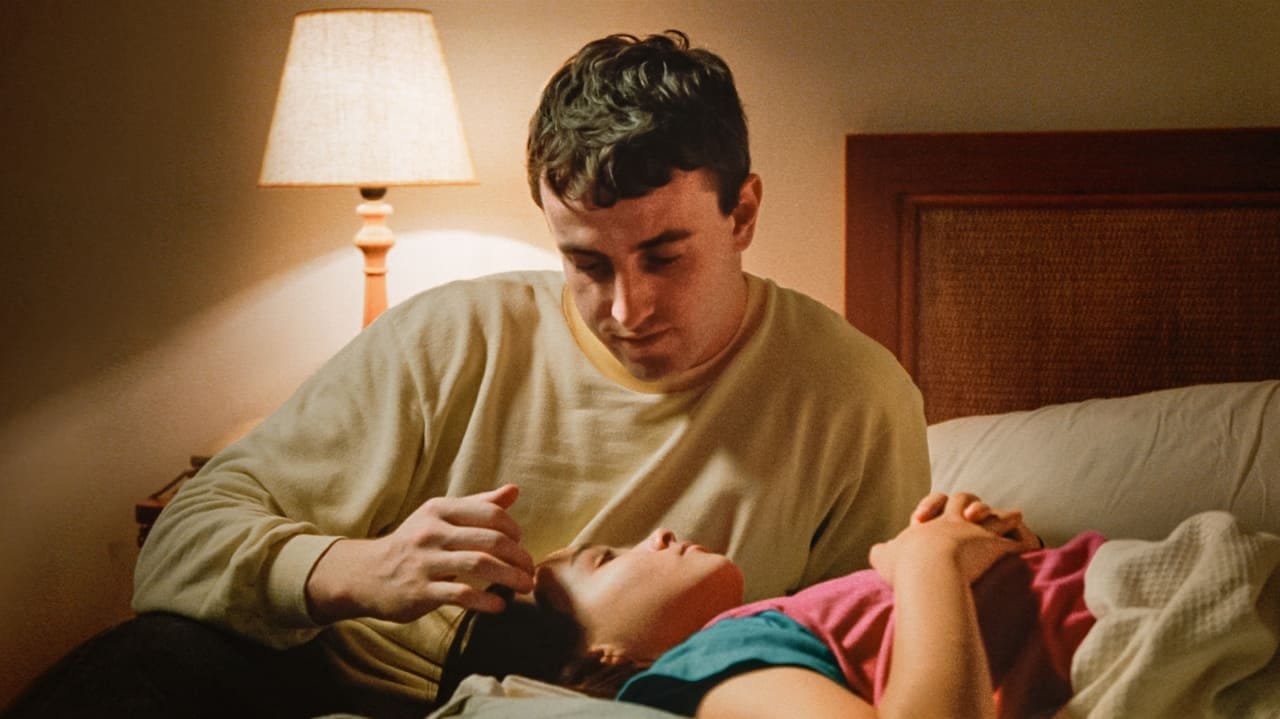
Just before the new school year Calum and Sophie go on vacation together. Calum is no longer with Sophie’s mother, and we get the sense this is his only significant in person time with her. The film generally follows their interactions during this vacation. It is told partially through the lens of “archival” video camera footage taking during this vacation. The other part would be what we recognize as in-the-moment, bereft of this stylistic add on.
The film starts off slow and quiet, almost as if a “slice of life” film and reminiscent of Columbus. They are staying at a somewhat cheesy all inclusive style beach resort, except they cannot afford the all inclusive bit. It’s the type of place with over the top entertainment at every dinner meal which the pair dutifully attend most nights.
More than anything we begin to understand that Calum just wants to spend time with his daughter. He works hard to connect with her and they form a nice pair. They go to the beach, they swim in the pool, they like to take videos together. It’s all very sweet and still.
We begin to see small snippets of interstitials of Calum seemingly at a rave. Lights flash and blink. Bodies swirl around. And in flashes we see him move about.
There is something about Calum that has always seemed off, and we begin to see it more. He can be quiet and withdrawn and always seems tired and disjointed. He lets Sophie hang out with some older kids and he drifts back to a rug shop they were in earlier, only to quietly sit and stare into the complexity of the weaving, and then, lay down on his back and stare up into the nothingness.
All the while Sophie is hanging out with college age kids, discovering attraction and drinking a little too early for a twelve year old. There is one boy she meets who she plays in the arcade with, a more fitting an appropriate relationship which further highlights her growing up.
Sophie: I think it's nice that we share the same sky.
Calum: What you mean?
Sophie: Well, like... Sometimes at playtime, I look up at the sky and if I can see the Sun then... I think that the fact that we can both see the Sun, so even though we're not actually in the same place and we're not actually together... we kind of are in a way, you know? Like we're both underneath the same sky, so... kind of together.One day Calum is not himself and as they sit at a karaoke night we can tell not all is right. Sophie wants to get up and sing with her father, she notes they do this every vacation. Calum declines, he says not now, not tonight. Sophie goes up to the stage and sings anyways. It’s achingly bad and Calum just sits there not engage with her at all.
She wants to stay and he wants to leave. So they part ways. She ends up back with the older kids, seeing things she shouldn’t. She eventually meets up with the boy from the arcade and they share a kiss. Returning to the room she’s locked out and cannot get in. Calum is absent, both in body and spirit. We see him off at the beach, along in the dark, swimming in the dark waves. Sophie finally get’s the hotel attendant to open the door and finds her father naked and passed out on the bed.
It’s really impossible to say anything more about this film without revealing the ending or the meaning. We slowly drift through this vacation with the two of them and then emerge at the end where Sophie must return home. The film ends up like a great novel, one where the entirety of the story makes sense in the context of a revealing ending.
After the night of betrayal we flash forward and see an older Sophie who is awoken at night with her partner and we hear a baby crying in the background.
Back in the past, our present, we notice Calum differently now. There is a sadness to him, a quiet depression that has been present the entire time, but only now begins to reveal itself further. This is where we notice Paul Mescal’s performance and the way he can convey such depth of emotion and power in his face. His hang dog movements and entire essence are wrapped into the depressive Calum.
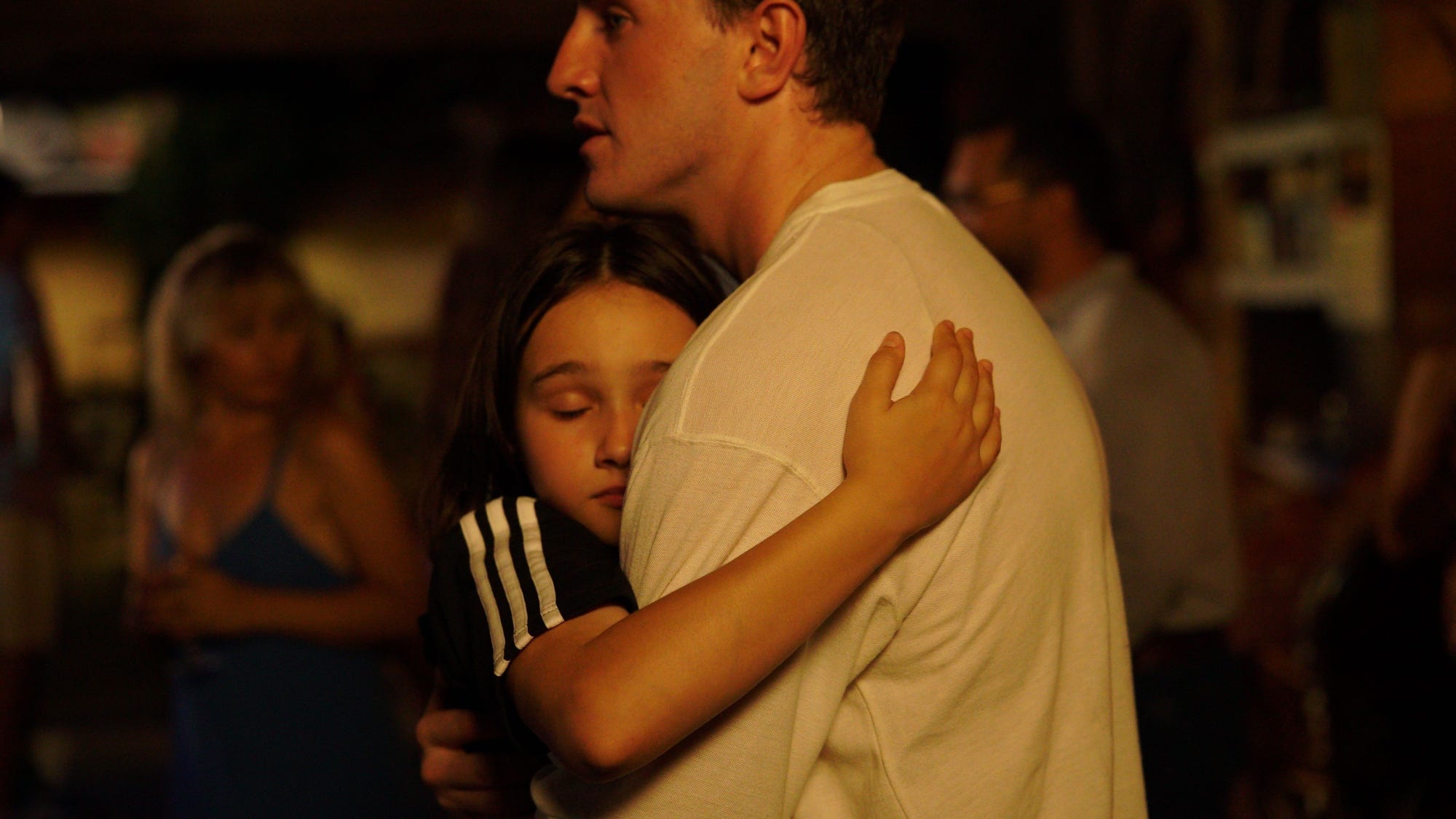
In the end, on their last night Calum get’s Sophie onto the dance floor with him He tells her he loves to dance. And as they dance we flash to the rave scene where we see older Sophie and Calum finding each other amongst the chaos and hugging, just like they are now.
The meaning of all of this is revealed in the end. Calum says goodbye to Sophie in the cutest and saddest airport goodbye scene. The video camera footage is so achingly sad and desperate in the best of ways in this scene.
Then we see adult Sophie watching the video camera and the film swivels around and Calum is alone in the airport hallway with the same camera. He folds it up and walks down the hall and through the doors into the rave sequences we’ve been seeing.
I read this as the end of Calum. That he could no longer hold it together and had given up on life. My assumption was the tragedy of suicide. As he walks through those doors it grips you and you can feel nothing but the depth of sadness the film has been building towards the entire time.
The rave scenes and the older Sophie indicate that she is only now understanding her father and the pain and troubles that he went through. Her embracing him in the rave scene was only her trying to get back to that night on vacation where she was able to purely embrace him as her father and protector.
The film stays away from the details of Calum’s struggles, but they are evident. His career situation seems in shambles. He begins the film with a broken wrist and develops a shoulder injury during the vacation that remains a mystery. He is troubled, yet Wells, as the director, doesn’t apply judgement. She sits back and passively observes him, and we feel sympathy for Calum.
Parents are people with struggles and emotions and caught up in the messiness of life like all of us. Is this an invocation for all of us to recognize the fallibility of our parents with grace? The natural inclination is to rage when the imperfection of those that raised you becomes apart. This films argues for grace and understanding since so much is hidden from us in our younger years.
Is this the message of the film? I’m not sure. It’s a worthy one that would urge us all to provide grace to those who raised us. It’s fitting that older Sophie doesn't seem to have these realizations until a child of her own is present. The simple reminder of a baby crying in the background lets us know this.
Having two daughters of my own, and having my own struggles with life, not to the extent of Calum, I was deeply moved by this film. The performances alone make it worth watching. It is one of those wonderful creations where it seems to get better with time and once the context of the ending infuses you it becomes thought provoking and fills one with a sense of melancholy.
It’s the kind of film that makes you want to be a better parent and child all at the same time. If you enjoy slower films and quietly great performances you will enjoy Aftersun.
Musical Pairing: Out On The Weekend, Neil Young