

Old Henry
Directed By: Potsy Ponciroli

Old Henry is a 2021 film starring Tim Blake Nelson and Stephen Dorff. It is streaming on Paramount+ right now. This one goes out to Sam Ford who recommended it.
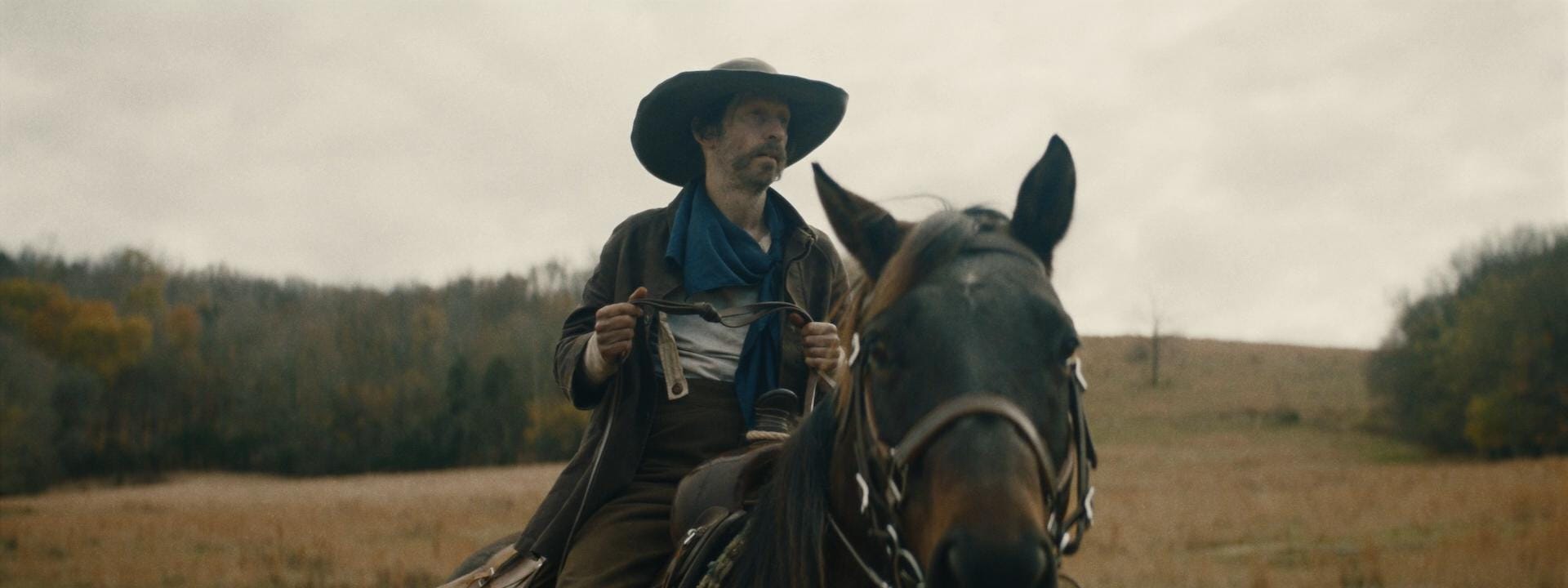
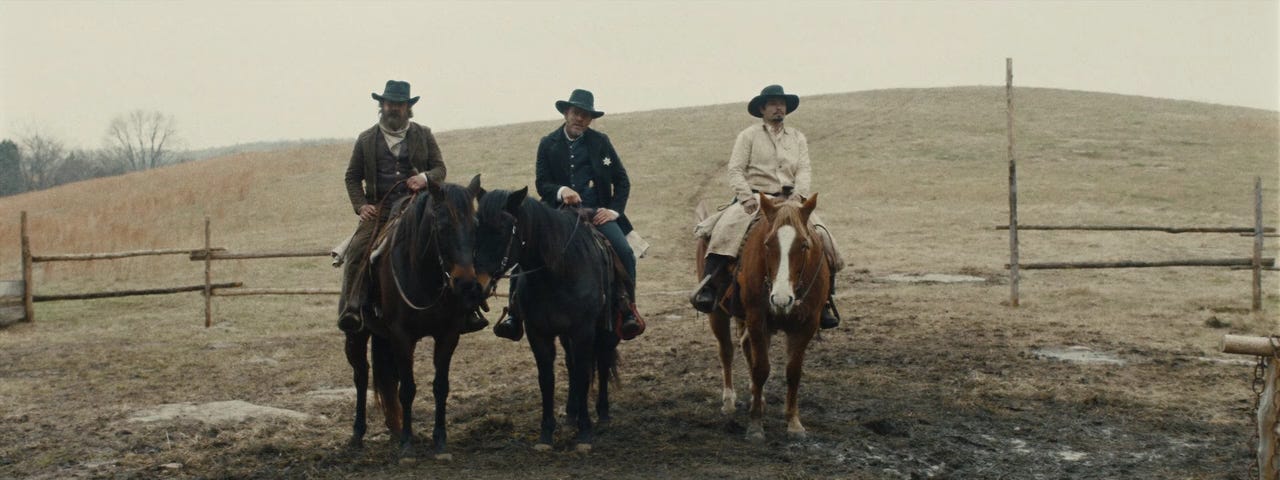
Old Henry is a western in true fashion and we open with a horse chase. Three riders with badges hunt down a fleeing man and with calm cruelty end his life. They are searching for another, someone who has stolen from them.
Henry (Tim Blake Nelson) and his son (Wyatt) live on a frontier cabin. Henry is a simple hard working farmer who quotes the Bible. Wyatt is a young man desirous of more from life and disgusted with his father’s seeming lack of ambition. At the hillside approach of their isolated existence a riderless horse appears. Henry rides out and finds a wounded man lying faint next to a satchel filled with cash. He brings both home and hides the money and tends to the hunted man.
The next day Old Henry rides out again and leaves his son at home. His son stands out in front of the house and is framed in the doorway. It is and echo of the famed John Ford shot of John Wayne in The Searchers. This is one of the most famous shots in cinematic history, playing within one of the most well-worn genre’s in American film. What does this mean? What is the language of cinema telling us?
Its an interesting idea, the language of cinema. A certain shot or scene can recall previous movies and indicate a mood, a feeling, a foreshadowing of plot. Or, it could just be a omage, a callback to something great. Either way it is indicative within the framework of a film and worth paying attention to.
During this second ride out Henry begins to show himself more than a simple farmer. He comes upon the three riders and observes them from a distance, staying hidden from an expert tracker. He returns home and the wounded man (Curry) has escaped his bonds and has Wyatt pinned. Henry quickly dispatches him with surprising brutality. The riders appear at the cabin and oddly enough Henry does not give up Curry, but acts defiantly.
Tim Blake Nelson is is lanky with a sinewy toughness. He is weathered and ugly with an unrecognizable voice. He has transformed himself into Henry - a fierce frontiersman with a hidden past. The performance was very effective and surprising coming from an actor that mainly associated with the goofiness of Oh Brother, Where Art Though?
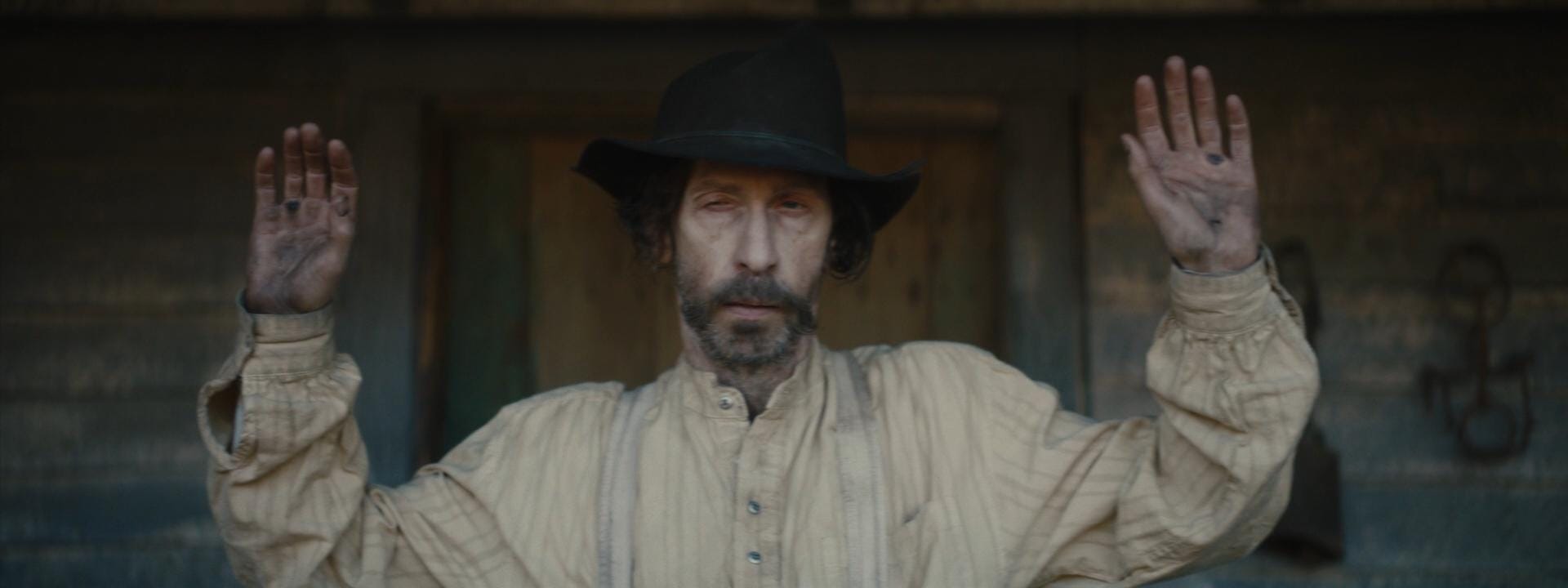
Old Henry was filmed in the late fall, most leaves are off the trees and the long grasses are browned. There is a starkness to the setting, a hallowed grittiness in the season and the filmmaking that matches. I couldn’t imagine the slow stark dialogue backdropped by green trees and a summer world teeming with life. No, this is a season of death.
The seasonality of the storytelling feel important here. Just like the iconic hot boiling summer of Do The Right Thing where the season matches the heightening racial tensions in the neighborhood. In Old Henry the starkness of the season matches men accustomed to ending lives.
Inevitably the film boils down to the gunman outside versus the men fighting back inside the house. It becomes a classic western shootout film in the best of ways. Of course we learn the real identity of Old Henry. He is a gunman and a killer of significance, capable of anything in the mythology of the great western gunman.
There is something profoundly interesting in the film playing within the myth of the west while creating a western in the mold of something like Rio Bravo or the hundreds of films of this ilk - men trapped in a building forced to defend themselves from attacking bandits.
The power of the Western is that it can be anything. It can be a genre film, purely focused on hitting the beats and providing reliable entertainment, or it can be more. Often it plays with its own contained mythology like Unforgiven. Old Henry hints at more but is ultimately a well done Western that gives you everything you could ask for.
Spoiler Below
At the end of the film Henry sits slumped over, bleeding, riddled with bullets. It’s been revealed that he is Billy the Kid, a mythical figure in western history. He dies and his son rides across the shadowy hillside presumably leaving the frontier forever.
The myth of the open American West, founded on the idea of rugged individualism and the abilities of a single person to rise above the chaff, feels dead in the throws of late stage capitalism. As Henry (Billy the Kid) dies, so too, the film tells us, dies this American hope of the west and all it personifies.
Musical Pairing: Upward Over The Mountain, Iron & Wine